The guide · The island's pantry · 5 min read
Curry leaf, or karapincha, what it is and is not
Curry leaf, karapincha in Sinhala, is a fresh leaf of the citrus family, not curry powder. How Sri Lanka cooks with it, and our Karapincha Mojito mocktail.
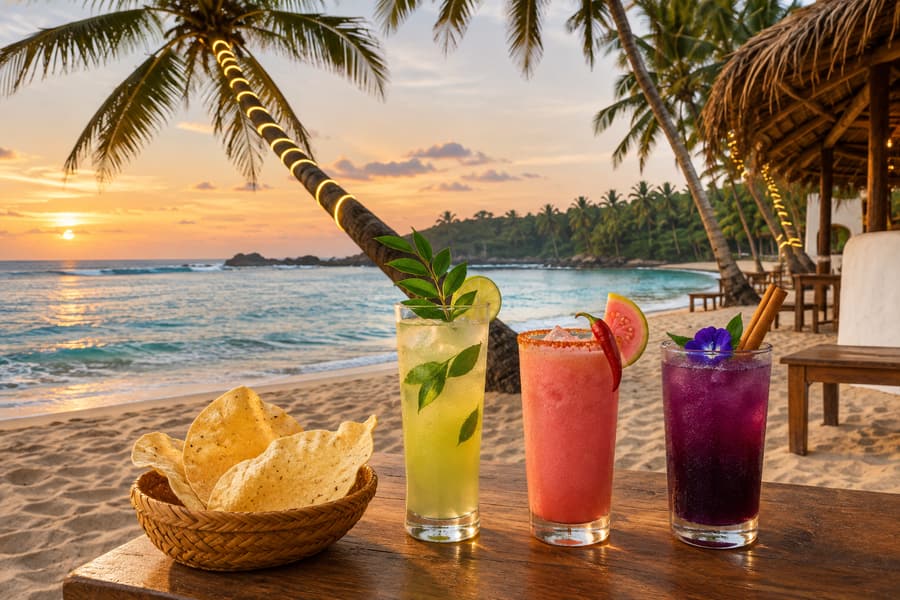
Curry leaf, karapincha in Sinhala, is the fresh leaf of a small tree of the citrus family, fried in hot oil at the start of many Sri Lankan dishes. It is not curry powder, and it is not the "curry plant" of European gardens. At Ohana it also takes the place of mint in our Karapincha Mojito, a mocktail, 2,200 LKR.
What is curry leaf?
The tree is Murraya koenigii, a relative of the lemon and the orange, native to the Indian subcontinent, Sri Lanka included. It is a small tree, usually four to six metres tall. What cooks call one "leaf" is really a thin stem carrying 11 to 21 small, pointed leaflets. In the kitchen the whole stem is pulled through the fingers and the leaflets fall into the pan.
The smell is hard to compare with anything. It is green and warm at once, a little citrus, a little nutty, slightly bitter. Sri Lankans call it karapincha, Tamil speakers karuveppilai. If one smell says "a Sri Lankan kitchen at noon", this is it.
What is it not?
- It is not curry powder. Curry powder is a blend of ground spices, such as turmeric, coriander and cumin, first put together under British rule in India as a shortcut. Some blends contain a little dried curry leaf, many contain none. No single plant tastes of "curry".
- It is not the curry plant. The silver-leaved shrub sold in European garden centres as "curry plant" is Helichrysum italicum, a member of the daisy family. It smells of curry on a warm day, it is not related, and it is not recommended for cooking.
- It is not a bay leaf. You do not have to fish it out. In Sri Lanka the leaves stay in the dish, and you can eat them or push them aside.
Even the word is borrowed. "Curry" comes from the Tamil kari, a spiced sauce, and the leaf took its English name from the dishes it went into.
How is it used in cooking?
Mostly at the very beginning. Oil is heated, and the leaves go in, often with mustard seeds and chopped onion. They crackle, they darken, and in a few seconds the oil carries their smell. Everything else is built on that. Cooks call this tempering. In Sri Lanka the curry leaf usually goes into the pan together with rampe, the pandan leaf, and the two are the base note of most of the island's curries.
The leaf is used in other ways too. It is ground into a karapincha sambol, simmered in dhal and fish curries, and dry-roasted into spice blends.
One thing matters more than any recipe: freshness. Dried curry leaves are sold, but they are much weaker in smell and taste than fresh ones. It is one reason Sri Lankan food is hard to copy far from here, and one reason it tastes the way it does on the island.
Curry leaf also has a place in the Ayurvedic and Siddha traditions. There is no good clinical evidence behind those uses, and we make no claim. In our kitchen it is a flavour. It is food, not medicine.
Where does curry leaf appear in our kitchen?
- Sri Lankan Omelette, 2,400 LKR. Turmeric-gold eggs folded with red onion, green chilli and karapincha. Served hot, with toasted sourdough. It is marked spicy.
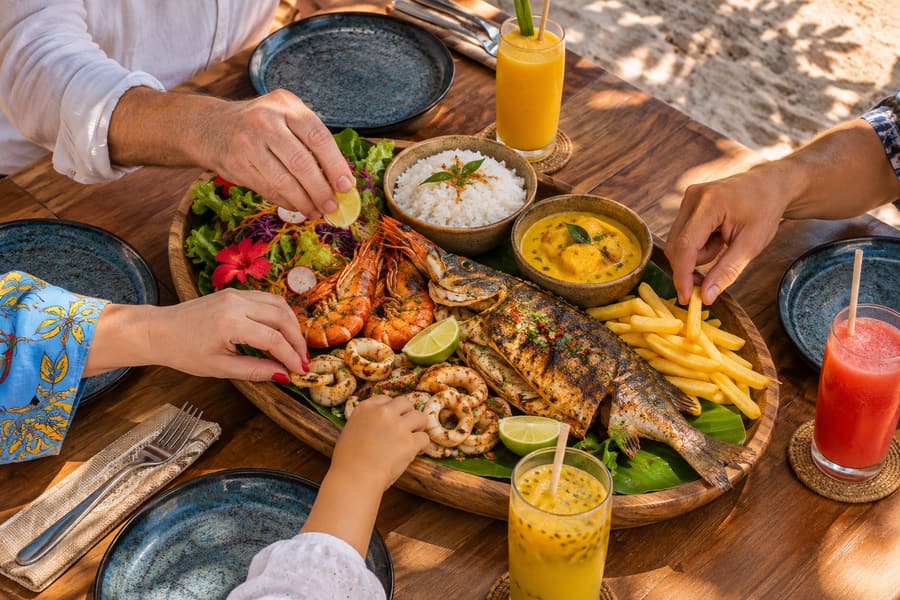
- Mahi Mahi Pineapple Curry, 6,900 LKR. A grilled fillet on coconut mashed potatoes, under a golden curry of coconut milk and sweet pineapple, fragrant with curry leaves, ginger and cinnamon.
- Tempeh Steak with Pineapple Curry, 6,400 LKR. The vegan way of the same dish, with seared marinated tempeh in place of the fish.
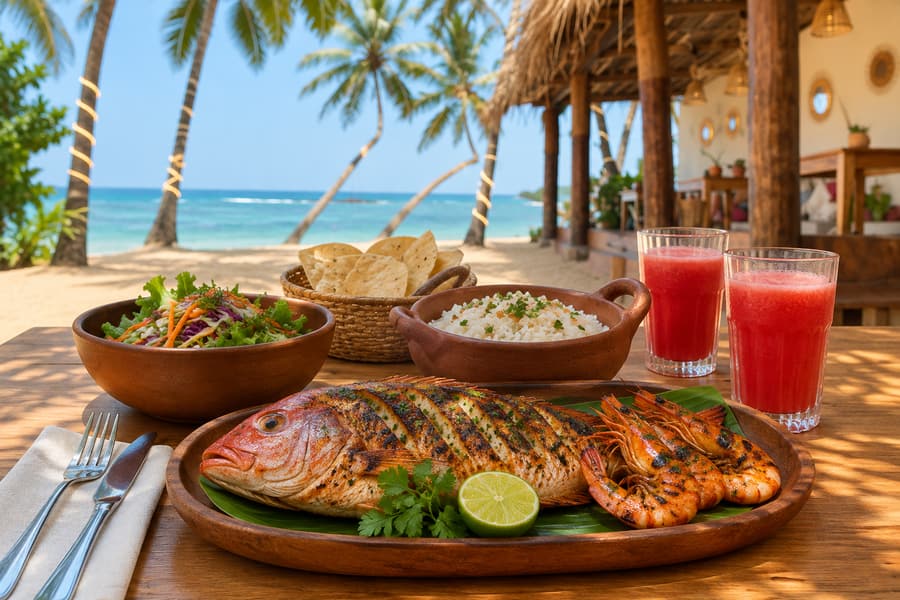
- The coconut curry gravy that comes with the Ohana Seafood Platter, 18,900 LKR, and the Red Snapper for Two, 15,900 LKR. It is the same pineapple and coconut sauce, with curry leaves and rampe in it.
There is more about the other things in that sauce in Sri Lankan spices, a short guide.
Why put curry leaf in a mojito?
Because it belongs to the citrus family, and a mojito is built on lime. Beside lime and orange, curry leaf is among relatives.
Our Karapincha Mojito, 2,200 LKR, is one of the signatures of the drinks list. Fresh curry leaves are muddled with lime in the glass, where a classic mojito would have mint. Then come our curry leaf syrup, made here from curry leaves and sugar, a squeeze of local orange, ice and soda. There is no alcohol in it, as in everything we pour.
What you taste first is lime and a clean sweetness. Then something green and warm that mint does not have, closer to the smell of a kitchen than of a garden. If you know Sri Lankan food, you will know the smell at once. You have probably never met it cold.
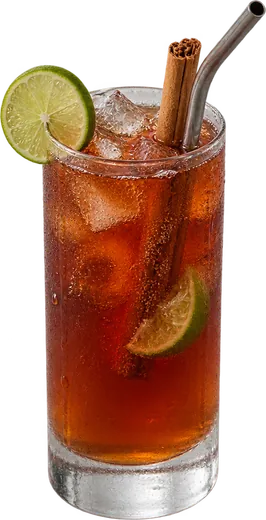
If you would like to stay with the island's plants, the same list holds a Ceylon Cinnamon Iced Tea, 1,200 LKR, and a Spicy Guava, 2,400 LKR, with fresh ginger and a sliver of green chilli. And there is more on the green leaf in our salad and our shots in gotukola explained.
Where can you taste it?
At our restaurant on Turtle Beach, Dikwella, where curry leaf is part of what the island grows and how we cook it. Come for breakfast and have it in the omelette, or come in the afternoon and have it in a tall glass with your feet in the sand.
Good to know
- The Karapincha Mojito and the other mocktails are served all day, from 08:00 to 21:00.
- The Sri Lankan Omelette is a breakfast dish, served from 08:00 to 11:00. The curry and the platters are served from 11:00 to 21:00.
- Food here is not spicy unless the dish says so.
- No alcohol is served. Prices are in LKR, plus a 10% service charge.
- We are at Turtle Beach, Dikwella, less than five minutes by road from Hiriketiya.