The guide · Breakfast, brunch and coffee · 5 min read
Shakshuka and breakfasts from the world, the stories
Where shakshuka, schug, huevos verdes, labneh with eggs and the Sri Lankan omelette come from, and what each of these world breakfasts costs at Ohana.
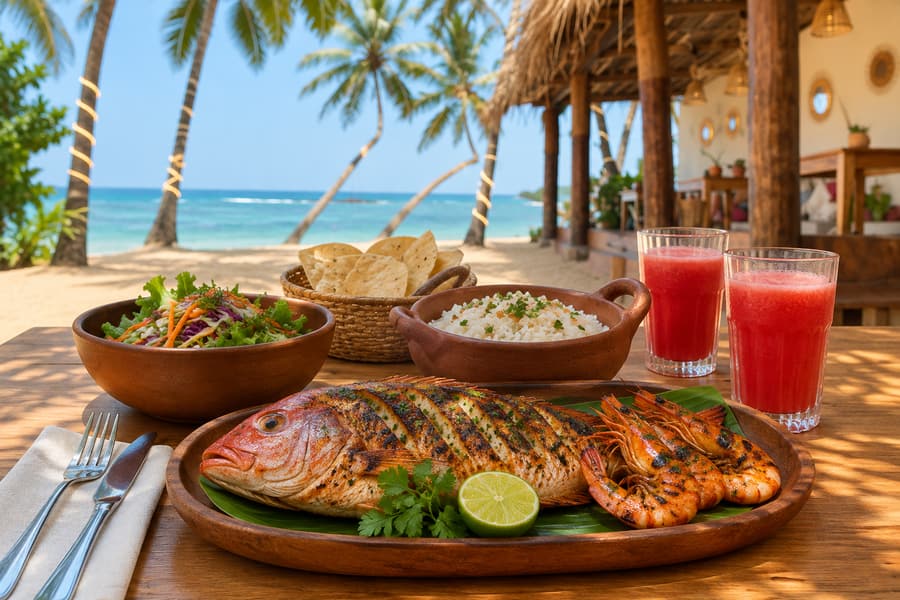
Our breakfast menu has a section called World Breakfasts: eggs the North African and Yemeni way, the Mexican way, the Levantine way and the Sri Lankan way, from 2,400 to 3,250 LKR. Each plate has a story older than any of us, and here they are, as far as the sources we trust can tell them.
Where does shakshuka come from?
From North Africa. Shakshuka is a dish of the Maghreb, the coast that runs from Libya to Morocco: eggs poached in a sauce of tomato, pepper, onion and garlic. The name means "mixture" in the Arabic of Algeria and Tunisia.
Food historians do not agree on everything. Some see it as a child of an Ottoman dish with a similar name. Others place it in a wider family of Mediterranean vegetable stews, cousins of ratatouille. What is clear is how it travelled. Jewish families from the Maghreb carried it to Israel in the 1950s, it became a breakfast there, and today it is on cafe menus all over the world.
So why is ours called Yemeni?
Because of what sits on top. Schug, also written zhug or sahawiq, is the hot green relish of Yemen. Its Arabic name comes from the word for crushing, since it was ground between stones. Fresh green chilli, coriander, garlic and spices are pounded together into something bright and fierce.
- Yemeni Shakshuka, 3,250 LKR. Two soft poached eggs on a warm tomato sauce with cumin and paprika, under a spoon of schug, with Arabic bread for mopping. This one is spicy. Our schug has green chilli, coriander, garlic, cumin, coriander seed and cardamom.
- Vegan Yemeni Shakshuka, 3,000 LKR. The same sauce and the same schug, with chickpeas in place of the eggs and toasted sourdough.
So the plate is honest about both halves: a North African dish, finished the Yemeni way.
What are huevos verdes?
"Green eggs", in Spanish. They belong to the family of huevos rancheros, the eggs of the Mexican ranch, which began as the big mid-morning meal on farms: fried eggs on tortillas with a chilli salsa. An old name for the green version is eggs "in green chilli".
In Mexico the green salsa is made with the tomatillo, a small fruit in a papery husk that was grown there long before the Spanish came. Mexicans call it tomate verde, the green tomato.
- Huevos Verdes, 2,900 LKR. Sunny-side-up eggs in a simmered salsa of green tomatoes and chilli, on warm tortillas with avocado, our labneh and red onion. Spicy. Our salsa is made with green tomatoes, lime and green chilli.
The labneh is our own addition. It is not Mexican, and we do not pretend it is. It cools the chilli.
What is labneh, and why eggs with it?
Labneh is yoghurt, salted and strained until it is thick enough to spread. It is a breakfast of the Levant, Egypt and the Arabian Peninsula, usually on a plate under olive oil, with za'atar and bread.
Here the story bends towards Sri Lanka. The island has its own thick buffalo curd, and we make our labneh from it by hanging the curd for a day.
- Tomato, Labneh, Soft Eggs, 2,950 LKR. A cool bed of labneh under jammy eggs, dressed tomatoes, za'atar and olive oil, with sourdough for scooping. Nothing spicy here.
- Fitness Omelette, 2,800 LKR. Eggs blended with fresh spinach into a bright green omelette, folded around warm labneh and toasted pumpkin seeds, with toast and a side salad.
And the breakfasts from here?
Two plates in this section come from the island itself.
- Sri Lankan Omelette, 2,400 LKR. The omelette of local breakfast tables: eggs gold with turmeric, folded with red onion, green chilli and karapincha, the curry leaf the island cooks with. Spicy, and served with toasted sourdough.
- Legume Breakfast, 2,400 LKR. Warm mung beans and chickpeas with rice, grated coconut and a fresh lunu miris of onion, chilli and lime. Then one visitor from far away: chimichurri, the green herb sauce of Argentina. Spicy, and made only from plants.
For hoppers, milk rice and curd with treacle, read Sri Lankan breakfast explained.
All of these are home cooking at heart: eggs, bread and a sauce. We change them as little as we can, and where we have changed something, such as curd for labneh or sourdough from our own kitchen, we have told you above.
Which one should you order?
- You like heat: the Yemeni Shakshuka. The schug is fiery, so go slowly with the first spoon.
- You want no chilli at all: Tomato, Labneh, Soft Eggs, or the Fitness Omelette.
- You eat plant-based: the Vegan Yemeni Shakshuka or the Legume Breakfast.
- You are two and cannot choose: the Ohana Morning · For Foodies puts the shakshuka and the labneh eggs on one table with Milk Rice and Kithul Waffles. Read about it in breakfast platters to share.
Food at Ohana is not spicy unless the dish says so. The other morning plates are on our page for breakfast and brunch near Hiriketiya.
Good to know
- Breakfast is served from 08:00 to 11:00, every day.
- We are at Turtle Beach, Dikwella, less than five minutes by road from Hiriketiya.
- Prices are in LKR, plus a 10% service charge.
- The full menu marks every spicy dish and lists the allergens.
- Sourdough bread is made in our kitchen, and filtered water is on the house.